

November 12, 2026
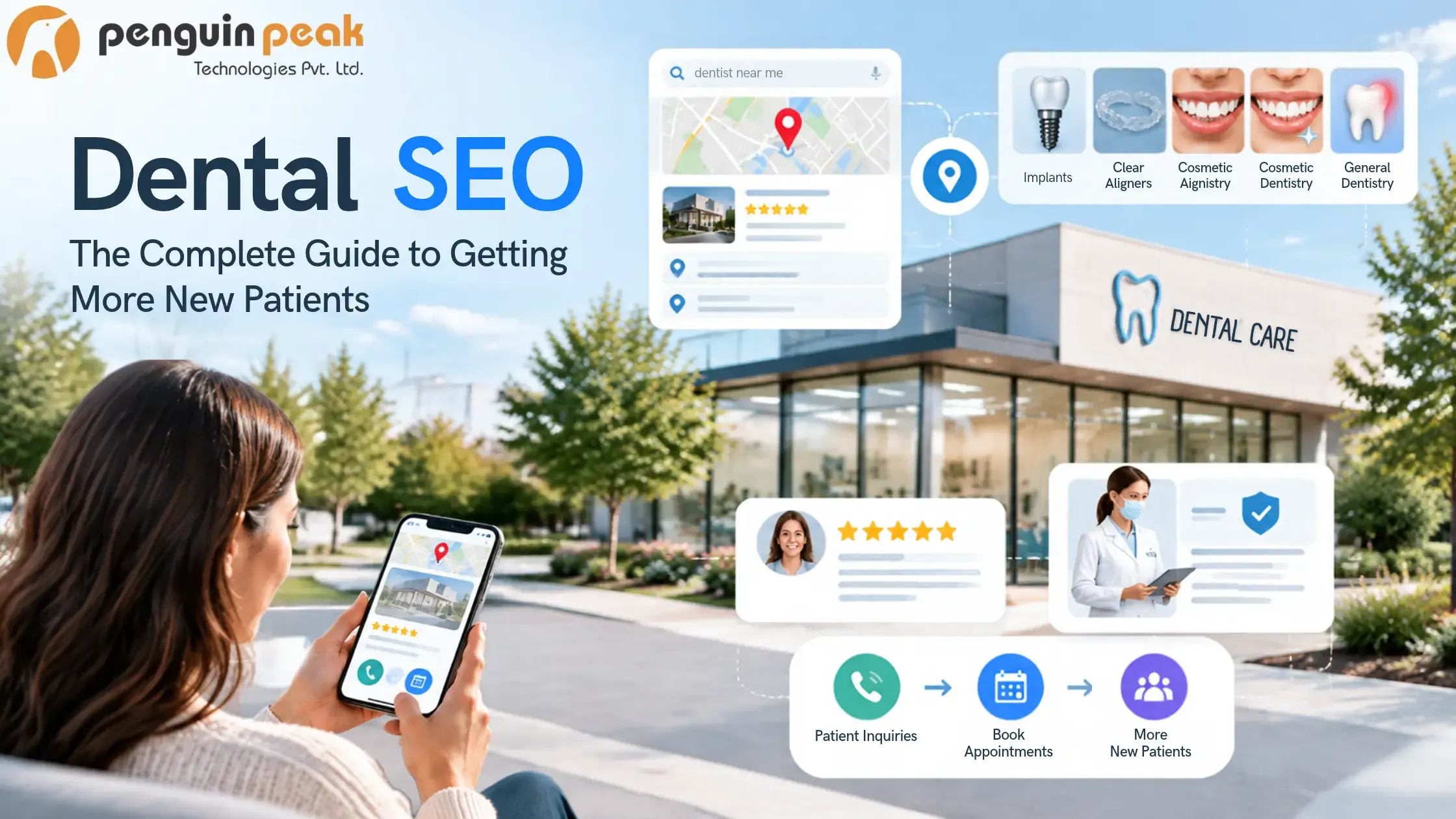
Often the problem is not in the services provided but in the visibility in the market. When someone is in pain, has a chipped tooth, or wants to get braces, they do not just scroll and browse. They research and pick one of the first few who made it to the top and look trustworthy. Hence, dental seo, plays a major role in how your clinic ends up on that shortlist. This guide will help all dentists, practitioners, and your dental marketing teams who want a clear, compliant plan for 2027.
Key takeaways
- Dental SEO is essentially local SEO. Your Google Business Profile, reviews, and location pages will determine which practice gets the call.
- Treatment pages (implants, aligners, veneers, teeth whitening, emergencies) attract the most valuable patients, thus deserve their own pages.
- They would like to know how much it will cost before calling. Give information about factors that affect the cost and your financing plans.
- Since health is a “Your Money or Your Life” category, Google gives extra importance to the content that showcases experience and expertise.
- Before and after pictures and testimonials require signed patient consent.
- Measure calls and scheduled visits, not rankings only.
What is dental SEO?
Dental SEO involves the process of ensuring that the dental practice is seen and trusted by search engines and AI response devices to ensure that those near the business can discover and contact the practice.
This is a more specialised field than SEO for healthcare in general. Dental patients usually make their decision while searching locally and make their decisions based on just a few dental practices.
What dental patients search for
Google advises creating content that is intended for people first. For a dental clinic, that starts with understanding why someone is searching.
| Search type | Example searches | Page that should rank | What the page must do |
|---|---|---|---|
| Emergency | “emergency dentist near me”, “broken tooth open now” | Emergency page, Google Business Profile | Show hours, phone and directions instantly |
| Treatment | “dental implants”, “clear aligners”, “teeth whitening” | Treatment pages | Explain who it suits, the process, recovery and next steps |
| Cost | “dental implant cost”, “payment plans dentist” | Pricing and financing page | Explain what affects price and how to pay |
| Local choice | “family dentist near me”, “best dentist in bodakdev [area]” | Location page, dentist profiles, reviews | Build trust and make booking easy |
| Kids and families | “pediatric dentist”, “dentist for anxious patients” | Dedicated service pages | Reassure and explain what a visit is like |
| Brand | “Dentalign Clinic reviews” | Homepage, reviews | Stay accurate and consistent everywhere |
If one page tries to cover every type, it usually ranks for none of them.
Why local SEO drives dental growth
Most dental queries have local intent, regardless of whether the user adds “near me” in the search box. Google serves up the map pack featuring a few dental clinics, and those clinics get most of the traffic.
The winners usually feature a good Google Business Profile, a steady stream of fresh reviews, and listing and website consistency to back all of that. It is a battle you can win even if you do not have the biggest budget in the city. We work with Dentalign Family Dental Care, the top-ranking dental clinic in Bodakdev, Ahmedabad.
E-E-A-T for dental practices
E-E-A-T stands for experience, expertise, authoritativeness, and trust. It is not a single ranking factor, but Google says its systems give even more weight to content that shows it on topics that could affect people’s health, and that it helps when it is clear who created the content.
| Signal | What searchers and Google look for | How a dental practice shows it |
|---|---|---|
| Experience | First-hand knowledge of the treatment | Dentist-written treatment guides, “what to expect” walk-throughs, consented before-and-after photos |
| Expertise | Qualified authors and reviewers | Named dentist on every clinical page, with degrees, specialities and registration details |
| Authoritativeness | Recognition from credible sources | Professional memberships, specialist training, local press, community involvement |
| Trust | Accuracy, safety, transparency | HTTPS, Privacy Policy, correct contact information and honest claims |
Be careful with words like “painless” or “best”. If you cannot prove a claim, it hurts trust and may break advertising rules.
Why dental SEO matters in 2027
In an October 2025 survey of 5,111 US adults, Pew Research Center found that 85% at least sometimes get health information from health care providers and 60% from major health websites. About half said it is at least somewhat difficult to judge whether health information is accurate, and 54% said conflicting information makes it hard to know what to trust. A clinic that shows exactly who wrote each page, and when it was reviewed, stands out in that crowd.
Pew also found that about a third (32%) of US adults aged 18 to 29 at least sometimes use AI chatbots for health information, so clear, accurate content now has two audiences: people and machines.
The building blocks of dental SEO
1. Google Business Profile
Complete your profile by making a claim. Select the appropriate category, include all treatments that you provide, upload photos of your clinic and staff, keep your opening hours updated (even on holidays), and make sure your name, address, and phone number are consistent in all places.
2. Treatment pages that answer real questions
Create separate pages for each major treatment. An effective page should contain:
- For whom and for what occasions the treatment is appropriate
- How it is done, step-by-step
- Aftercare and recovery, explained in clear words
- Factors affecting the price and financial arrangement options
- Most common questions asked by patients
- Dentist’s name and credentials
- Booking button
Keep in mind that you are writing for the patient who is already anxious, not the search engine.
3. Dentist profile pages
Patients like to see which doctor will be attending to them. This should include a photograph, qualifications, areas of specialisation, languages, and a brief human bio of the dentist. The information should also contain schema markup for the clinic and dentist.
4. Reviews and reputation
Reviews are one of the most powerful signals locally, and one of the most compelling reasons why a patient selects you. Simply ask satisfied patients before they leave your office to write reviews and respond to every review professionally. Do not identify a person as a patient or discuss any treatment publicly.
5. Technical SEO
Here, speed and mobile, security, structured data, and structured URLs matter a lot. When techinal seo is on top, then when people search for dentists, the website is fast. Ensure the use of HTTPS, especially when filling out booking forms. Implement schema markup for your dental clinic, doctors, locations, and articles. Use clear URLs and relate treatments to each other.
6. A booking path that works
Include a ‘click-to-call’ option and a ‘book now’ button on all important web pages. Make sure the forms are concise and have opening hours prominently displayed and tested via mobile devices. An urgent patient won’t scroll through your home page.
What to expect in 2027
The statistics differ depending on the research, so view the information below as advice rather than predictions.
- Answering questions using AI will be related to the growth of informational searches. According to the research conducted by WebFX on over 130,000 health searches, AI Overviews were present in 51%, which is twice as high as the industry average. However, other statistics may indicate different results, so make sure you check your own Search Console data.
- Local and appointment-related searches are likely to become more consistent. According to BrightEdge analysis of the past three years, queries for bringing new patients still have an SEO character.
- Third-party signals will play an important role. According to the IQVIA white paper on AI searches, listings, reviews, and third-party citations will influence the way an AI tool presents a provider more and more.
- It is crucial not to judge solely on clicks. Count calls and appointments, not just the number of clicks.
The reasonable action for a dental clinic will be to maintain the accuracy of its content and invest in its listing, reviews, and booking process.
Compliance, privacy and ethics
Dental marketing laws differ from one country to another, and there may be guidelines from dental regulatory agencies as well. Do not make promises that cannot be kept and do not use exaggerated statements, before-and-after photos, or similar. Always seek the patient’s written permission prior to using the patient’s images or testimonials, and comply with applicable data protection guidelines, such as HIPAA in the USA and GDPR in the EU/UK, while doing so.
Common dental SEO mistakes
- One catch-all “services” page rather than treatment-specific pages
- No pricing information
- Incompletely filled out Google Business Profile
- Not enough or not recent reviews, and no responses to them
- Photos of models rather than pictures of the office and staff
- Unfriendly appointment booking system
- Measuring website traffic rather than bookings
How to measure dental SEO
- Google Business Profile calls, directions, website clicks
- Appointments booked via organic search per treatment
- Organic traffic to treatment/locations pages
- Organic search rankings of priority treatments/local search
- Number of reviews, average rating, response rate
Link this all up to your booking software to find out what SEO is searching for bookmen for you.
A practical 90-day plan
| Phase | Focus | What gets done |
|---|---|---|
| Days 1–30 | Fix the basics | Complete Google Business Profile. Check every listing for name, address and phone consistency. Audit speed, mobile and booking. |
| Days 31–60 | Build the core pages | Write or improve pages for your top treatments. Add dentist profiles, cost and financing information, and schema. |
| Days 61–90 | Grow | Start a review-request routine. Publish helpful patient-education articles. Earn local links. Set up call and booking tracking. |

Penguinpeak Technologies
FAQ's
This will depend on your level of competitiveness, your location, and the current standing of your website. Typically, most clinics will have to wait for a few months before seeing any significant results. Some may take longer.
Both have their place in the process of online marketing because paid advertising ensures immediate results, while SEO creates results that last as long as your site is active. Both methods are good for practice.
Definitely. The number of reviews, their quality, and recency determine local visibility and significantly influence a patient’s choice of one clinic over another.
Usually, yes. Relevance, good reviews, and relevant specialist content allow for competing in certain areas and niches.
Possibly. Structured, expert-reviewed content with proper schema markup can be used as an information source by AI. No guarantees of being mentioned by AI, but those practices are recommended by Google for creating valuable content.
Get a Free Quote
Complete the Form Below and Get Your Quote in 24 Hours !