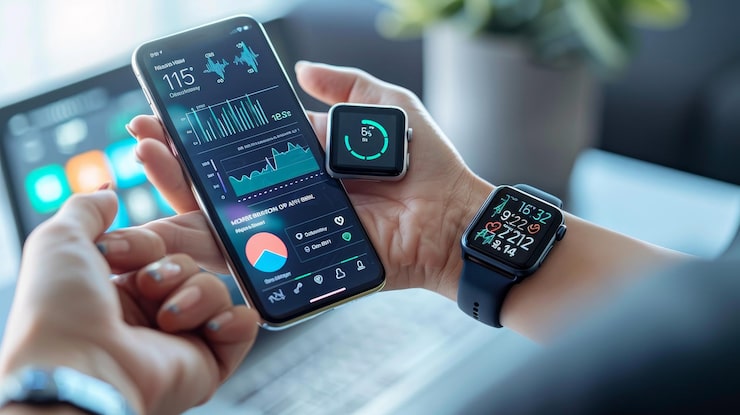
Technology keeps moving forward, and the way people interact with digital products is changing quickly. Not long ago, smartphones transformed how businesses connected with customers. Today, wearable technology is driving the next big shift.
Smart watches, fitness trackers, health monitors, smart glasses, and similar devices are becoming a part of our daily lives. These devices help users to access information, receive notifications, and even allow them to perform various actions without touching their devices. Thus, wearable application development has become a new opportunity for modern businesses.
For modern businesses in the USA, wearable applications provide a new opportunity to enhance customer experience, gain insights into customer behavior, and even provide a more personalized experience for users. Wearable technology is providing a new opportunity for businesses to deliver innovative applications that were not possible even a few years ago.
This article will provide information about what wearable app development is all about, the importance of wearable application development for modern businesses, and how modern businesses can successfully implement wearable application development along with mobile application development.
Development of wearable applications refers to the creation of software for wearable devices. This includes smart watches, activity trackers, health monitoring devices, smart glasses, etc.
Unlike other applications that run on devices such as smartphones and computers, wearable applications run on limited devices. This calls for the development of wearable applications that run effectively.
Generally, wearable application development do not run independently. This is because wearable applications rely on other devices to run. For instance, a wearable application development that tracks a person’s activity can rely on a smartphone to provide the user with detailed information.
This is the reason why wearable technology is linked to the development of mobile applications. This is because a business will create a wearable application that runs alongside a mobile application. This will provide the users with the desired results.
Wearable technology is growing quickly because it allows businesses to interact with users instantly and in a more personal way.
Instead of waiting for customers to open an app or visit a website, wearable devices deliver information directly to the user’s wrist or wearable screen. Notifications appear instantly, making communication faster and more effective.
For businesses in the United States, this creates several advantages. Companies can provide timely updates, improve customer engagement, and collect valuable data about user behavior.
Healthcare providers use wearable apps to track patient activity and health metrics. Logistics companies use them to monitor employee safety and performance. Fitness brands use wearable apps to guide workouts and track progress. Because of these benefits, many organizations are now investing in professional wearable app development service providers to create custom wearable solutions.
For wearable devices to perform optimally, they must be connected to a wider digital ecosystem. Most wearable application development rely on a smartphone or the cloud to access deeper insights.
For instance, a smartwatch could display information such as notifications or fitness data. In most cases, deeper insights such as analytics will be accessible on a connected smartphone app. Businesses also rely on the internet to access wearable application development. Web app development USA systems allow companies to track performance statistics, access user insights, and create reports.
Because of this, successful wearable solutions usually combine three key components:
• Wearable apps for quick interaction and data collection
• Mobile apps for detailed user engagement
• Web platforms for analytics and management
This connected approach allows businesses to create seamless digital experiences across devices.

Businesses investing in wearable application development often see several practical benefits.
Real-Time Data and Insights
Wearable devices contain sensors that track movement, location, heart rate, and other health or activity metrics. This allows businesses to collect valuable real-time data.
For example, fitness companies can analyze workout patterns, while healthcare providers can monitor patient health continuously.
Stronger Customer Engagement
Wearables create a direct communication channel with users. Notifications delivered to a smartwatch are often seen faster than phone notifications.
For businesses, this means higher engagement and better interaction with customers.
Convenience for Users
Wearable apps are designed for quick access. Users can check updates, receive alerts, or track activity within seconds.
This convenience improves user satisfaction and encourages regular app usage.
Competitive Advantage
Companies that adopt wearable technology early can differentiate themselves in competitive markets. Innovative digital services help brands stand out and attract tech-focused audiences.
Wearable technology is being used across many industries in the United States.
Healthcare
Healthcare providers are increasingly using wearable apps to monitor patient health. Devices can track heart rate, sleep patterns, physical activity, and other vital signs. These systems often integrate with mobile application development platforms and hospital management systems.
Fitness and Wellness
Fitness trackers and smartwatch apps are some of the most common wearable application development. These apps track workouts, calories burned, and sleep quality.
Fitness brands use wearable apps to offer personalized coaching and progress tracking.
Workplace Safety and Productivity
Industries such as construction, manufacturing, and logistics are using wearables to improve safety and efficiency.
Wearable devices can detect fatigue, track worker location, and provide alerts about environmental hazards.
Retail and Customer Experience
Retail companies are experimenting with wearable apps to deliver personalized offers and notifications to customers while they shop.
This approach creates new opportunities for customer engagement and loyalty programs.
A successful wearable app must be carefully designed to match the unique nature of wearable devices.
Simple User Interface
Wearable screens are small, so the interface must be clear and easy to understand. Users should be able to access important information quickly.
Fast Performance
Wearable devices have limited processing power. Efficient development ensures apps run smoothly without draining battery life.
Sensor Integration
Wearable apps often rely on sensors such as GPS, motion tracking, or heart rate monitors. Using these sensors effectively adds real value for users.
Seamless Synchronization
Wearable apps should sync smoothly with smartphones and cloud systems. This allows users to view detailed insights and historical data.
Despite the numerous benefits associated with the development of wearable technology, there are some challenges associated with the development process.
One of the challenges associated with the development of wearable technology is the compatibility of the devices. The various wearable technology platforms have different hardware and software.
The other challenge associated with the development of wearable technology is the battery life. The application must be optimized for the device so that the battery life is maximized.
Businesses are able to overcome the various challenges associated with the development of wearable technology through the use of experienced wearable app development service providers.
Wearable apps generate large amounts of data, which must be stored and analyzed properly.
Cloud systems allow businesses to collect data from thousands of devices and process it efficiently. Advanced analytics can then identify trends and patterns that help companies improve their services.
Through web app development USA platforms, organizations can create dashboards that display wearable data in real time. This allows managers and analysts to monitor performance and make informed decisions.
Combining wearable technology with cloud analytics unlocks powerful opportunities for data-driven innovation.
Business entities that wish to engage in the development of wearable application development will first consider the problem they wish to solve.
After the purpose of the application has been identified, the next step will be the selection of the right device platform.
The design of the user experience is another significant step in the development of the wearable application. Due to the small screen of the device, the application will be designed around the basic features.
The wearable application development will be required to integrate with existing applications that have been developed through mobile app development.
The wearable technology market is expected to experience tremendous growth in the coming years.
New sensors, artificial intelligence, and connectivity will make wearables even more powerful. Businesses will be able to provide predictions, recommendations, and real-time insights.
Industries such as healthcare, logistics, and retail have already begun exploring new opportunities in wearable technology. As the technology becomes even better, businesses that invest in the development of wearables will be ready for the future.
Wearable technology is changing the way in which organizations interact with their customers. With the help of wearable application development services, organizations can not only offer real-time services but can also gain valuable insights that help them make informed decisions.
If wearable technology is integrated with other technologies like mobile application development services and web application development services USA, organizations can benefit greatly.
In the case of organizations that wish to develop effective wearable application development, it is important that they seek the services of an experienced organization. Organizations like Penguinpeak Technologies help modern organizations develop effective wearable application development.

Development timelines vary depending on complexity and platform requirements. Basic wearable apps may take a few weeks to build, while advanced apps with sensor integrations, analytics, and cloud connectivity take several months.
Wearable apps allow businesses to deliver faster, more personalised experiences directly on users’ devices. They help companies collect real-time data, improve customer engagement, and create innovative digital services in industries like healthcare, fitness, retail, and logistics.
Wearable applications are commonly developed for smartwatches, fitness bands, AR/VR headsets, smart glasses, and health-monitoring devices. These devices often connect with smartphones or cloud systems to process and display information.
Several industries benefit from wearable applications, including healthcare, fitness, sports, logistics, retail, and enterprise workforce management. Wearables help track performance, monitor health, and improve productivity in real time.
Wearable app development costs vary based on features, device compatibility, UI complexity, and integrations with mobile apps or cloud platforms. Simple wearable apps cost less, while enterprise-grade solutions with advanced data tracking require larger budgets.
Wearable devices collect data through built-in sensors such as heart-rate monitors, motion sensors, and GPS. The app then processes this information and often sends it to cloud platforms for analytics and storage.
Businesses can monetise wearable apps through subscriptions, premium features, enterprise solutions, health monitoring services, and integration with broader digital ecosystems.
Wearable apps use technologies such as Bluetooth connectivity, IoT frameworks, cloud computing, APIs, and mobile integration frameworks. Developers also work with device sensors like heart-rate monitors, accelerometers, and GPS.
Complete the Form Below and Get Your Quote in 24 Hours !